


£298 Billion Cost Of Unhealthy Diets Sharpens Warning Over Britain’s Fresh Produce Supply
A new report argues that the UK pays a vast price for unhealthy diets. The Fresh Produce Consortium says making fruit and vegetables more accessible will also depend on protecting the global supply routes that bring them to Britain.
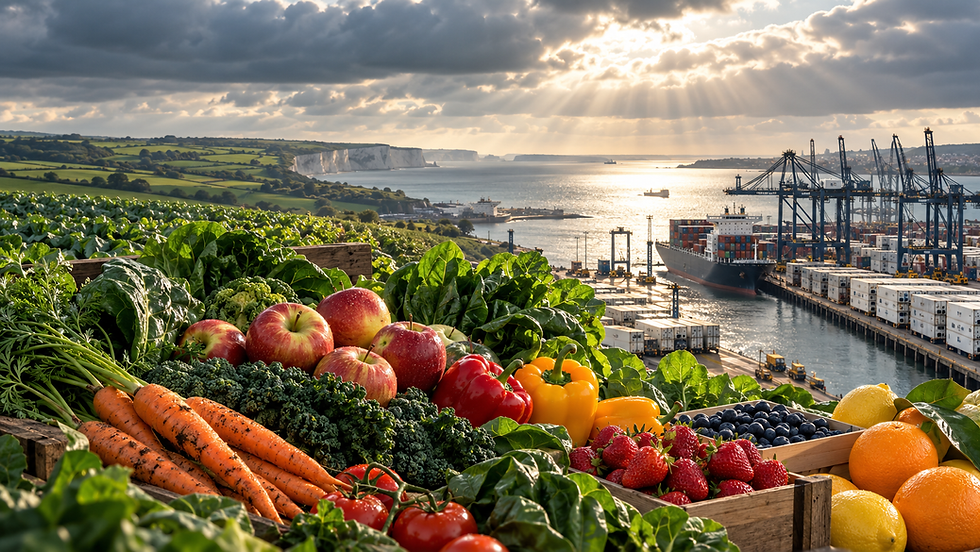
Unhealthy diets are estimated to cost the UK £298 billion a year through healthcare, social care, welfare payments, lost productivity and reduced quality of life, according to a new Food, Farming and Countryside Commission report. That is £30 billion more than the commission estimated in 2024.
Written by Professor Tim Jackson, The False Economy of Big Food: 2026 Update puts direct health, care and welfare costs at £104 billion, with a further £194 billion in estimated productivity and quality-of-life losses. It calculates that £51 billion a year is the gap between current household food spending and the estimated cost of a diet consistent with the government’s Eatwell Guide.
That £51 billion is an illustration of the spending gap, rather than a proposed subsidy. Nor would improving diets immediately recover the £298 billion: the report acknowledges uncertainty in its estimates and says health benefits would take time to materialise. Its central argument remains that the country spends heavily on the consequences of poor diets while healthy food stays out of reach for many households.
For fresh produce, affordability is only part of the question. Britain must also be able to supply the fruit and vegetables that a healthier diet requires. Defra’s latest horticulture figures show that UK growers provided around 56% of fresh vegetable supply in 2025, but 14% of fruit supply. Domestic production and imports therefore both have a role in maintaining year-round availability.
Fresh Produce Consortium (FPC) Chief Executive Nigel Jenney has argued that resilience depends on keeping those sources diverse. In earlier comments to Freshtalk Daily, he warned that “no single region, climate or trade relationship” can carry the risk alone. His prescription was “a resilient EU trading relationship sitting alongside strong Rest of World sourcing”.
That principle is at the heart of FPC’s concern about the proposed UK–EU sanitary and phytosanitary reset. The organisation supports smoother trade with Europe but warns that applying additional EU-style controls to produce arriving from outside the EU could increase inspections, certification, delays and costs.

FPC estimates that up to four million tonnes of imported goods could be affected and puts the potential additional burden on the sector at more than £300 million. These are FPC’s estimates of a possible outcome, rather than costs already incurred.
The connection with the FFCC report is consequential. If border friction raises the cost of perishable produce or reduces its shelf life, it could make the healthy diets policymakers want harder to afford and supply.
Equally, relying on imports without supporting British growers would leave another part of the system exposed. Defra identifies climate-related disruption and reliance on particular overseas suppliers among the risks to fresh produce availability.
The FFCC calls for better school food, targeted help for households, producer support and public procurement that develops regional markets for healthy food. Delivering that ambition will require a food security policy that backs UK production while preserving efficient access to European and wider global supplies.
The question is whether Britain can make healthy eating affordable without adding avoidable costs to the produce it needs most.
Comments