


AI Project Targets Earlier Onion And Brassica Pest Detection
- 2 days ago
- 3 min read
A new collaborative project bringing together growers, researchers, agronomists, and agritech specialists aims to improve pest monitoring in UK onion and brassica crops through artificial intelligence, smart trapping technology, and real-time data analysis.
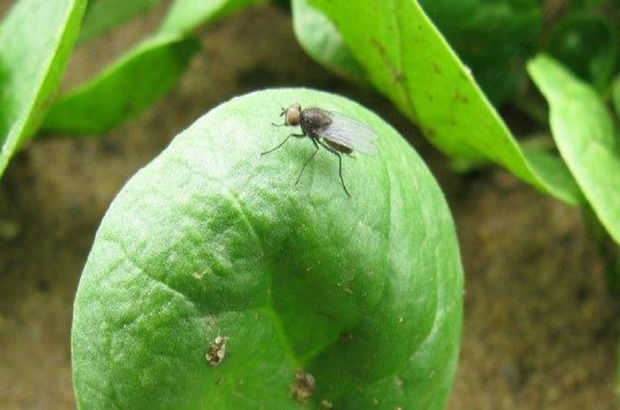
The grower-led initiative, known as TRACER-Pest, has been established to address one of the fresh produce sector’s ongoing production challenges: identifying economically damaging pest populations earlier and more consistently, while reducing reliance on labour-intensive manual monitoring.
Using smart traps, imaging technology, artificial intelligence, and cloud-based analytics, the project aims to support earlier intervention, more targeted crop protection strategies, and more sustainable production across UK onion and brassica crops.
TRACER-Pest will initially focus on two high-priority pests – Bean Seed Fly in onions and Swede Midge in brassicas – both of which present significant economic risks for UK growers.
Applying advanced imaging technology combined with machine learning algorithms, the TRACER-Pest system will automate the detection and classification of target insect pests directly in the field.
Information captured by smart traps will be analysed and converted into near real-time data to give growers earlier visibility of pest pressure and to support decisions during critical treatment windows.
Commercial field trials will be carried out across onion and brassica production sites, where the technology will be benchmarked against existing monitoring methods.
Over the course of the multi-year project, the partners will develop and deploy the system, train AI models, annotate pest data, validate performance, and refine the platform using feedback from growers and agronomists.
From Reaction To Prevention
The consortium comprises brassica grower P.E. Simmons & Son, onion producer P.G. Rix Farms, agronomy business Farmacy, the University of Warwick, agritech developer B-hive Innovations, and the British Growers Association.
The partners believe the technology could help shift crop protection strategies from reactive responses towards more precise and preventative management.
“TRACER-Pest is designed around the practical needs of growers,” explained a spokesperson for the consortium.
“By generating faster, more consistent pest data from the field, the project aims to help growers make better-informed decisions and protect crops more effectively.
“Swede Midge is becoming a major issue for brassica growers, with significant financial implications for the UK industry. Real-time monitoring could help us act much sooner than current sticky trap methods allow.”
A Combined Effort
To build a solution that works in real field conditions, each partner will bring specialist expertise to the project.
P.E. Simmons & Son will lead the programme and conduct Swede Midge trials across its brassica production sites in Cornwall, while P.G. Rix Farms will provide commercial onion fields for testing and validation.
Farmacy will contribute agronomic support and access to commercial trial sites, and the University of Warwick will provide scientific expertise in pest identification, data annotation, and research support.
B-hive Innovations is responsible for developing the TRACER-Pest platform, applying expertise in computer vision, machine learning, biosciences and hardware and software engineering to create a field-ready monitoring system.
British Growers will lead knowledge exchange and dissemination through its links with the British Onion Producers Association, the Brassica Growers Association, and the wider fresh produce industry.
Supporting Targeted Strategies
Earlier detection of pest activity has the potential to improve treatment timing, reduce unnecessary crop protection applications, and protect yields through better-informed decision-making.
The consortium said the project is also expected to reduce the need for manual crop scouting while providing more consistent and objective monitoring across multiple production sites.
Comments