


EU–UK Reset Summit Confirmed: Fresh Produce Industry Must Make Its Voice Heard
Fresh produce businesses have a fresh opportunity to press for changes to the UK–EU Reset after Brussels confirmed that the next summit will take place on 20 November — with agrifood rules among the areas under review.

The European Council announced on 12 October that its President, António Costa, and European Commission President Ursula von der Leyen will welcome Prime Minister Andy Burnham to Brussels for the second EU–UK summit.
Leaders will assess progress since the first summit in May 2025 and discuss the next steps in their relationship. A joint declaration is expected at the conclusion of the meeting.
For the fresh produce industry, the announcement gives renewed urgency to the case for protecting the global supply routes that keep British consumers supplied throughout the year.
FPC supports a better trading relationship with Europe. Its concern is that the proposed sanitary and phytosanitary arrangements could ease European trade while transferring additional costs and disruption to imports from the Rest of the World.
Its analysis indicates that around four million tonnes of fresh produce imports from outside the EU could be affected, with additional annual costs potentially exceeding £300 million.
For highly perishable products, additional delays can also put pressure on shelf life, waste and supply reliability. The consequences reach beyond importers to growers, wholesalers, retailers, hospitality businesses and consumers.
FPC’s central argument is that the Reset should support British production, European trade and trusted global sourcing together. Hard-pressed households need continued access to a diverse choice of safe, affordable, healthy fresh produce.
The consortium is seeking protection for the UK’s existing science-based, risk-led approach to Rest of World produce destined for domestic consumption. Nigel Jenney’s proposed sector-specific opt-out is intended to preserve that approach while maintaining biosecurity and food safety standards.
Businesses also need certainty to invest. Jenney has highlighted the millions already committed to preparations and infrastructure without securing the intended benefits.
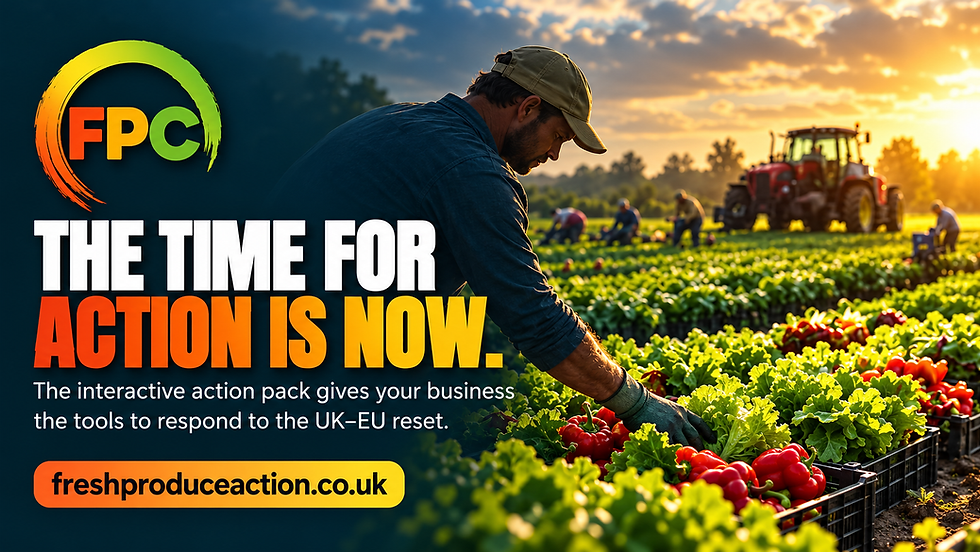
The Action Pack gives readers a straightforward way to turn these concerns into evidence that ministers and MPs can consider. It includes a campaign video, a detailed briefing, an inspection-frequency comparison and editable email templates.
Businesses should personalise the Prime Minister’s letter with their own consignment volumes, estimated additional costs and practical examples. The pack provides a postcode tool to add their local MP and a separate template to encourage colleagues and customers to participate.
As Jenney states on the campaign hub: “It only takes a few minutes to make a huge difference.”
With the summit approaching, the industry has a clear reason to act now: help ensure that decisions on agrifood trade reflect the realities of supplying Britain.
Comments