


Felix Launches Surplus Berry Smoothie Alongside Pledge To Rescue More Produce
Food redistribution charity Felix has partnered with B.fresh, BerryWorld, and Strawsons to launch a smoothie made from surplus berries and carrots, as it reveals plans to increase the volume of fruits and vegetables it rescues and redistributes across the UK to 175,000 portions in 2026.
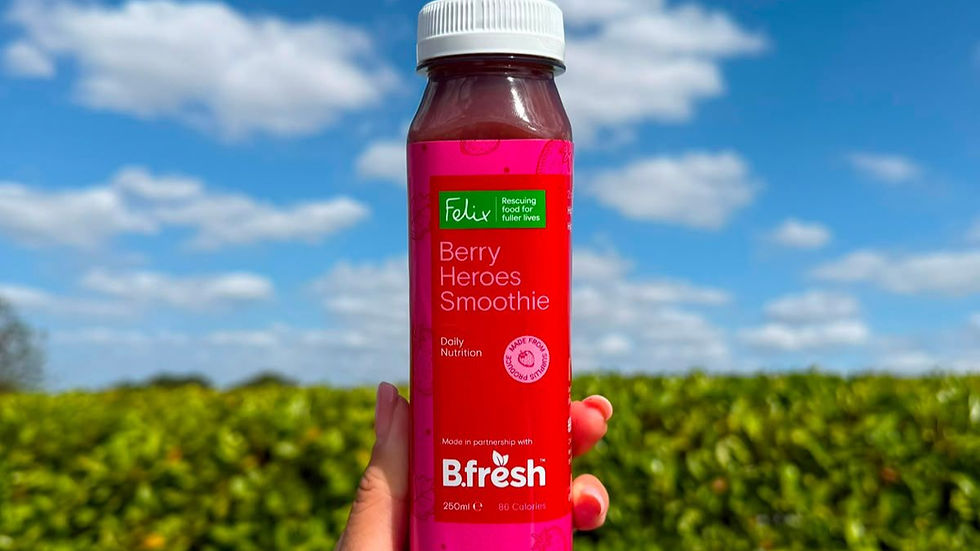
The food redistribution charity has worked with with B.fresh, BerryWorld, and Strawsons to create a small batch of smoothies from surplus berries and carrots that may otherwise have gone to waste.
The smoothie which has a shelf-life of around two to three weeks, is now being distributed by Felix across the UK.
The project was inspired by a team from Felix visiting BerryWorld and B.fresh where it identified opportunities at both sites, the charity said in a press release.
From there a trial was agreed and once that proved successful a run of 20,000 bottles of Berry Heroes Smoothies has been created.
Led by the Felix innovations team, and funded by Alliance Food Sourcing (AFS), over eight tonnes of produce have been rescued in the making of the smoothies.
Felix Commercial Manager, Emma White, said the project is an “amazing example” of how Felix is innovating to ensure more produce is being rescued, and hoped it would encourage more growers and manufacturers to work in partnership with the charity.
“The ingredients we have used were perfectly good to eat, but unsuitable for redistribution and so would have gone to waste,” White explained.
“Instead, they are being used in this smoothie, which is a healthy, nutritious product ideal for the children and families we and our network support.”
UK-based BerryWorld said the initiative arrived at an opportune time for the global soft fruit grower-supplier.
BerryWorld already donates surplus produce to Felix; providing around 800 tonnes or the equivalent of around 2 million meals since 2020.
“However, some berries are unsuitable for donation and we have been keen to find another way to put them to good use,” pointed out Emma Henry at BerryWorld.
“The idea of turning them into a drink was perfect and so this opportunity came at a perfect time for us,” she added.
Strawsons, meanwhile, produces a variety of vegetables and combinable crops and also donates to Felix.
“For the last four years we have been working with Felix and have been really pleased to know our surplus is getting to people instead of going to waste or into anaerobic digestion,” noted Gemma Williams, Supply Chain Manager from Strawsons.
“We have supplied carrots for juicing in the past and so were very happy to see them being used in this way again. They are an important extra ingredient for the smoothies adding more flavour and depth. It is exciting to know that this is yet another way of ensuring we can reduce food waste.”
British cold-pressed juice maker B.fresh said it was delighted to collaborate with Felix in the production of the surplus berry smoothie.
“This partnership is amazing and we have even got other companies involved, both Eclipse Labels and Source Design have played an integral role in creating this drink,”said Jake Davenport, Commercial Manager at B.fresh.
“We are so pleased with the results and the fact it is helping to prevent even more perfectly edible food from going to waste,” Davenport added.
Felix’s Commercial Manager, White, said the small batch of surplus berry smoothies demonstrates what is possible when companies work together.
“I hope we can encourage more growers and manufacturers to work in partnership, so we have more products like this to help those experiencing food insecurity,” White concluded.
innocent drinks Backs Redistribution Expansion

In a separate announcement, reported by Grocery Trader, Felix has expanded its partnership with innocent drinks to fund the recovery of more surplus fresh produce for redirection to charities and community organisations.
For innocent, the commitment extends an existing relationship with Felix, which has seen the charity redistribute surplus innocent juices and smoothies through its network for a number of years.
The new funding will enable Felix to increase to 175,000 portions the volume of fruit and vegetables it can rescue and redistribute, while innocent employees are also supporting the charity’s farm rescue programme.
Felix (formerly FareShare and The Felix Project) said the support from innocent will be particularly important as the public’s need for its redistribution services increases.
“As demand for our services continues to grow, support from partners like innocent is more important than ever,” explained Emma Burns, Senior Corporate Partnerships Manager at Felix.
“Through donating surplus stock, volunteering and funding 175,000 portions of fruit and veg, innocent is helping us rescue more good food and get it to charities and community organisations across the UK. We’re incredibly grateful for their commitment to this work.”
The organisations said the overall aim is to increase the amount of edible produce recovered from the supply chain and ensure it reaches charities and community organisations across the UK.
Louisa Handley, Head of healthy sustainable diets at innocent, said the company’s partnership with Felix is about helping more people to enjoy the goodness of fresh produce at a time when people are not getting enough.
“Less than one in five adults and one in ten 11-to-18-year-olds get their 5 A Day,” Handley noted. “By helping to deliver 175,000 portions of fruit and veg to people across the UK, we can make a practical difference and bring the power of fruit and veg to more people.”
At a recent volunteering day, innocent staff joined Felix and other volunteers at an orchard to harvest 2.7 tonnes of apples that would otherwise have remained unpicked. The fruit was redistributed the next day.
The announcements from Felix come at a time when the UK food system continues to face the challenge of balancing surplus produce with growing demand for access to affordable, nutritious food.
Comments