


Middle East Conflict Threatens Fresh Surge In UK Food Prices
- Mar 30
- 2 min read
UK households could face a sharp new wave of food inflation within months as the ongoing conflict in Iran begins to ripple through global supply chains, industry experts have warned.
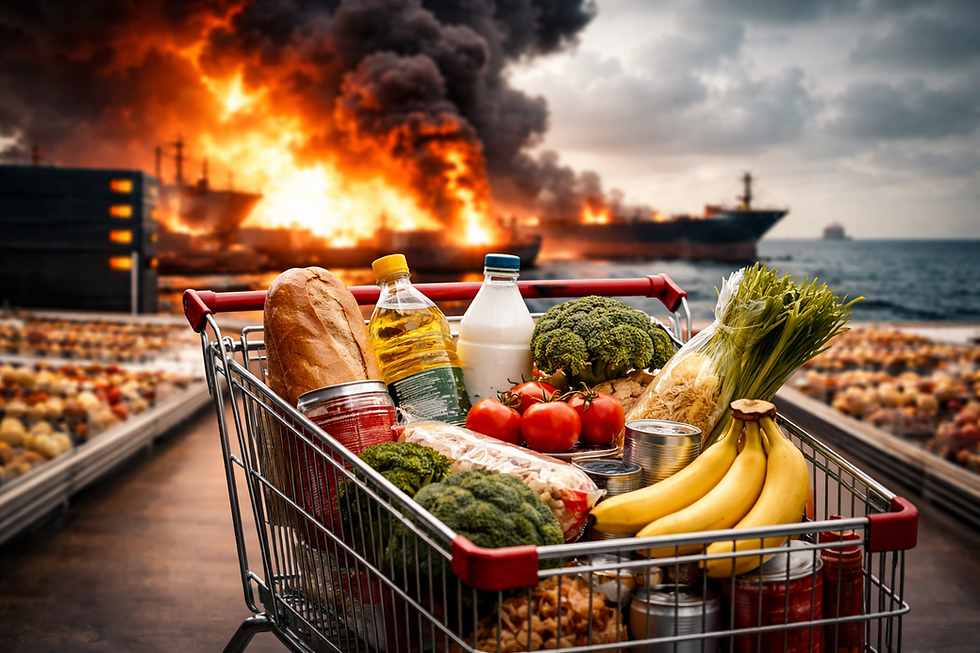
Fresh analysis from the Institute of Grocery Distribution (IGD) suggests food price inflation could more than double, rising from around 3.6% today to over 8% by June 2026 under a severe – albeit short-lived – energy shock scenario.
The projected spike would mark a significant escalation in cost pressures across the UK food system, with IGD warning that the increase could add more than £150 a year to the average household grocery bill.
Energy Shock Driving Food Costs Higher
At the heart of the warning is the growing disruption to global energy markets triggered by the conflict in the Middle East. Rising oil and fuel costs are already feeding through into every stage of the food supply chain – from fertiliser production and farming to transportation and retail distribution.
The Strait of Hormuz, a critical route for both energy and fertiliser exports, has become a major pressure point. Disruption here risks tightening supply and pushing input costs higher, placing further strain on growers and suppliers already operating on tight margins.
A Fresh Blow After Years Of Inflation
The warning comes at a time when UK consumers are still grappling with elevated food prices following years of inflationary pressure. Retail food costs are already around 38% higher than pre-pandemic levels, reflecting the cumulative impact of energy shocks and global instability.
While IGD’s central forecast points to food inflation averaging around 6.4% across 2026, the organisation cautions that a more severe energy shock could temporarily push prices significantly higher.
Mounting Pressure On Households And Supply Chains
For the fresh produce and wider food sector, the implications are clear: rising costs across energy, logistics and inputs are once again converging, threatening to squeeze margins and test consumer demand.
With households already bracing for higher energy bills later this year, any sustained escalation in food prices risks intensifying the cost-of-living challenge – and placing renewed scrutiny on supply chain resilience.
As global tensions continue to evolve, the industry faces a familiar but unwelcome reality: volatility in international markets is once again set to be felt directly at the UK checkout.
Comments