


New Global Network To Advance Controlled Environment Agriculture
Wageningen University & Research (WUR) has launched an international network to connect stakeholders across the controlled environment agriculture (CEA) sector and improve the exchange and application of knowledge worldwide.
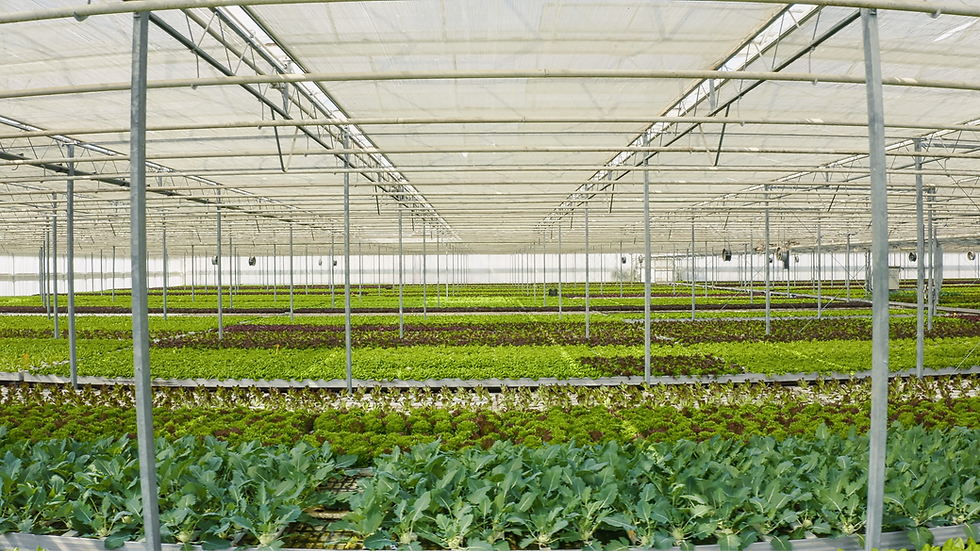
HortINspire brings together growers, technology providers, researchers, advisers, government organisations and other industry participants involved in protected cultivation across the globe.
The network is aimed at both organisations seeking expertise and those looking to contribute knowledge and experience. It will be presented officially during GreenTech Amsterdam on 10 June.
As controlled environment agriculture continues to expand globally, the pace of innovation is increasing across areas such as climate control, water, energy and labour efficiency, and crop production.
However, while knowledge and expertise are developing rapidly, translating successful approaches from one region to another remains a challenge.
Differences in climate, technology availability, financing, market conditions, and local requirements often mean that solutions must be adapted before they can be implemented successfully.
WUR says HortINspire has been established to help bridge that gap by creating a platform where practical experience, scientific knowledge, and emerging technologies can be shared more effectively.
“It will be a place where growers, companies, knowledge institutions and other parties can find each other, and where valuable collaborations can emerge,” explained initiator Jacqueline van Oosten of WUR Greenhouse Horticulture.
“From Wageningen University & Research, we bring in our own knowledge, but the network is explicitly intended to work both ways. We want to share knowledge and learn from experiences and solutions in other regions.”
By creating a structured international network for knowledge exchange and collaboration, WUR hopes HortINspire will help accelerate innovation and support the wider adoption of effective controlled environment agriculture practices around the world.
WUR expects the network to attract a broad range of stakeholders, including growers, technology developers, research institutions, consultants, and government bodies.
That diversity is central to the network’s purpose, according to Van Oosten.
“Knowledge about controlled environment agriculture only becomes valuable when it is applied in practice,” noted Van Oosten.
“A grower brings different questions to the table than, for example, a government body or investor. By bringing these parties together, HortINspire strengthens collaboration around controlled environment agriculture.”
Members will gain access to an international CEA-focused community, with opportunities to participate in region-specific thematic sessions, online expert discussions, and networking events.
An online member portal will also enable participants to ask questions, share insights, and exchange experiences with peers across different markets and production systems.
Membership is open to organisations and professionals working in controlled environment agriculture, with an initial focus on the protected cultivation sector.
Comments