


Nigel Jenney Stands Up For Global Fresh Produce Trade As Brexit Reset Debate Deepens
The FPC chief executive has highlighted the risks to Britain’s global fresh produce supplies as industry leaders debate the consequences of a proposed UK-EU food agreement.
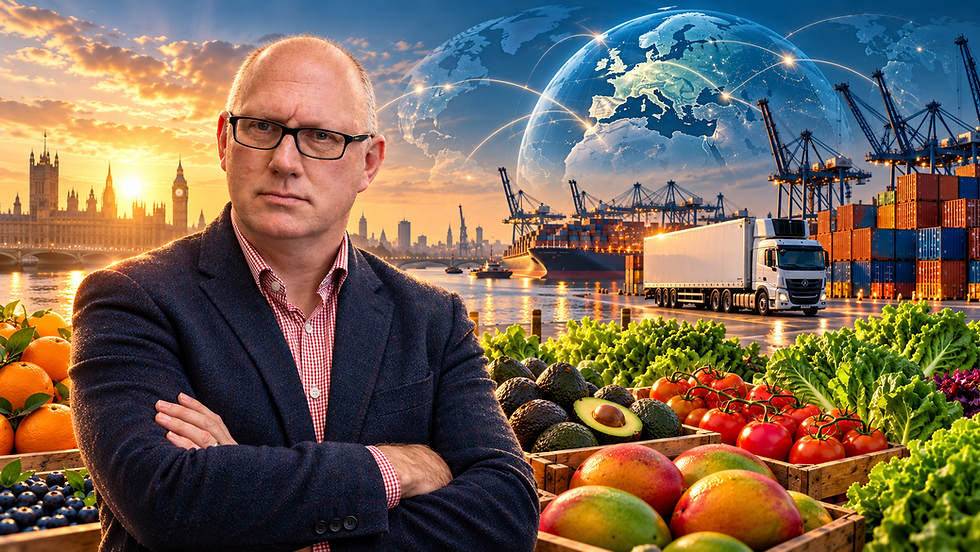
Fresh Produce Consortium chief executive Nigel Jenney has put the protection of Britain’s global fresh produce supply chains at the centre of the Brexit reset debate, warning that closer ties with Europe must not penalise trade with the rest of the world.
Speaking to iNews, which reported on Conservative plans to reverse Labour’s proposed UK-EU agreements, Jenney highlighted a crucial consideration for policymakers: imports from outside the EU account for 54 per cent of the UK’s imported fresh produce.
While parts of the food industry support the proposed sanitary and phytosanitary (SPS) agreement as a means of reducing trade barriers, Jenney warned that its implications for global sourcing could undermine those benefits.
“Whilst we would like a closer relationship with Europe, we don’t believe that closer relationship should be at the cost or the penalty of trading with the rest of the world, which would impact materially food inflation in the UK for fresh produce,” he told iNews.
His intervention champions the interests of businesses supplying Britain with fresh produce from across the world, ensuring their concerns feature in a debate dominated by UK-EU relations.
The proposed agreement would involve dynamic alignment — keeping relevant UK rules in step with evolving EU requirements — to reduce cross-border checks. Jenney’s concern is that this approach could also impose greater burdens on imports from other markets.
“We would probably welcome the Conservatives’ position on having a more pragmatic solution that doesn’t damage trade or drive UK food inflation,” he said.
His warning has also featured in recent Financial Times coverage. In its report, “Tory plan to rip up UK-EU food deal risks ‘huge uncertainty’”, Jenney argued that the Government’s approach would make European trade easier while making access harder for suppliers elsewhere.
“The government is knowingly compromising trade with the rest of the world,” he told the newspaper.
According to iNews, Andrew Griffith said dynamic alignment was unacceptable to the Conservatives, describing becoming a rule-taker from Brussels as a red line. Deputy leader Alex Burghart pledged to reverse Labour’s Brexit reset, while party leader Kemi Badenoch said some of Labour’s plans would pose problems for farmers.
Other industry voices, however, warned that reversing an agreement could create further disruption.
Food and Drink Federation chief executive Karen Betts told iNews that food and drink exports to the EU were down a third compared with 2019. She supported a deal as a sensible way to help exporters, while stressing that regulatory changes carry costs and businesses need a clear, consistent direction.
British Retail Consortium food director Andrew Opie said the proposed agreement would have only a small impact on supermarket prices. His principal concern was certainty: frequent changes to SPS controls could increase compliance challenges and risk disrupting availability.
David Henig, director of UK trade policy at the European Centre for Political Economy, criticised the Conservative position, arguing that following trading partners’ rules helps reduce barriers. He said an agreement could support some recovery in UK food exports to the EU, whereas reversal would bring greater uncertainty and friction.
Former UK-EU chief negotiator Nick Thomas-Symonds described the Conservative stance as anti-business, arguing that many British exporters already follow EU practices and rules. A Government source told iNews that the public wanted a European relationship supporting security, jobs and growth.
These competing views underline the challenge facing negotiators: delivering easier European trade, protecting global sourcing and giving businesses durable rules.
Jenney’s contribution ensures that the fresh produce sector’s particular exposure is firmly represented. His support for a closer European relationship comes with a clear condition — it must safeguard the wider trading network that helps keep Britain supplied.
Comments