


Trials Show AI Sensors Enable Earlier Pest Detection In Protected UK Tomatoes
In a game-changing development for UK horticulture, the TomatoGuard project has demonstrated that AI sensors can pick up stress signatures in protected tomato crops before visible symptoms, paving the way for earlier, more accurate IPM interventions, and lower pesticide inputs.
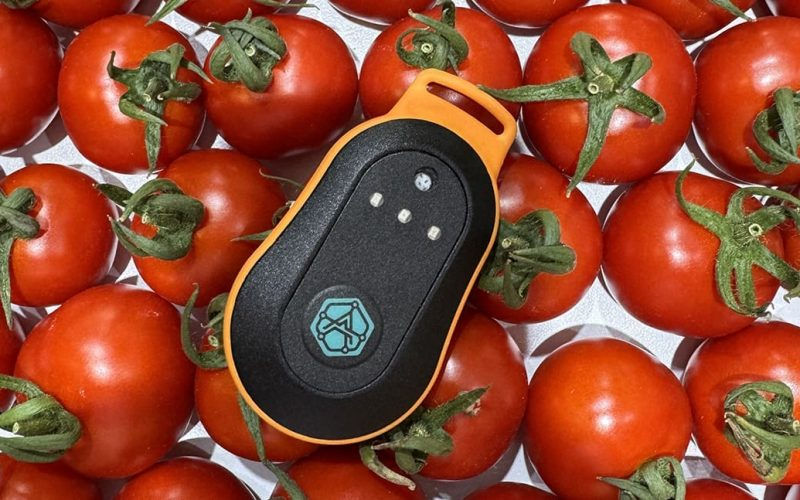
Funded by Innovate UK, TomatoGuard’s AI ‘digital nose’ platform was deployed in UK tomato glasshouse production to detect pest and stress problems, such as spider mite, one of the most serious pests for the sector.
In commercial tests at APS Produce, AI alerts for spider mite aligned with grower observations in around two‑thirds of cases (69%), highlighting strong potential for the technology but also the need to refine connectivity, battery life, sensor placement, and canopy airflow.
The pioneering technology from Altered Carbon is now in a position to continue towards commercialisation before scaling across the UK protected agriculture industry, according to the company.
“We’ve moved from prototype sensing to real-crop deployment and learned how real glasshouse conditions influence system performance in ways you only get by doing it in industry,” revealed Sam Onwugbenu, Co-founder and AI Lead at Altered Carbon.
“The potential to turn plant chemistry into actionable alerts, and to empower growers with earlier insight, is truly game-changing for UK horticulture.”

Next Steps Before Scaling To More Protected Crops
The next steps include: improved hardware, expanded stress signature libraries, and further early season and large-scale glasshouse and commercial trials through 2025.
This is before eventual scaling to other UK protected crops and systems such as vertical farming.
Backed by Defra and Innovate UK, the TomatoGuard project was delivered by a consortium led by Altered Carbon, with support from the UK Agri‑Tech Centre, Fargro, and commercial grower APS Produce.
The collaboration spanned experimental laboratory, controlled‑environment, and commercial glasshouse trials to develop and validate the technology under realistic production conditions.
The system uses Altered Carbon’s graphene‑based volatile organic compound (VOC) sensors, linked to embedded electronics and machine‑learning models to identify biochemical stress signals released by tomato plants.
Data is sent to growers via a cloud platform, turning plant chemistry into real‑time alerts about emerging issues in the crop and environment.
The initiative aims to help growers cut crop loss, reduce input costs, and support net‑zero goals by combining early pest detection with better environmental control in glasshouses.
Read more about TomatoGuard here.
Comments