


UK Food Security At Risk Without Greater Cold Chain Recognition
The UK’s food supply chain is vulnerable to disruption with increasing risks to food security, public health, and economic resilience unless the cold chain industry receives greater recognition and protection from the government, according to a new white paper from the Cold Chain Federation (CCF).

The organisation is calling for the cold chain to be designated as Critical National Infrastructure (CNI), reflecting its “essential role” in storing and transporting more than half of the food consumed in the UK, as well as essential medicines.
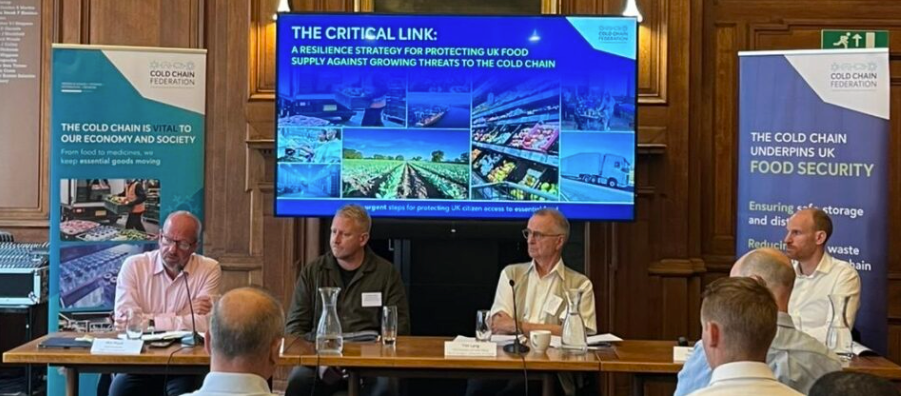
Titled The Critical Link: A Resilience Strategy for Protecting UK Food Supply Against Growing Threats to the Cold Chain, the CCF report argues that recent events, including Brexit, the Covid-19 pandemic, extreme weather, and geopolitical instability, have exposed weaknesses in supply chain resilience.
The white paper, launched at an event in Westminster on 2 June, warns that disruptions to temperature-controlled storage and logistics could lead to food shortages, inflationary pressures, increased waste, and potential social unrest if contingency planning is not strengthened.
Risks Are Growing
Among the key concerns highlighted are energy security, cyber threats, geopolitical conflict, climate-related impacts, labour shortages, and global supply chain disruption.
Currently, the CCF says cold stores and refrigerated transport networks are “significantly under-recognised” within national resilience and security planning despite their importance to food security and public health.
The organisation says 50% of the UK’s food supply depends on the cold chain with 104,000 temperature-controlled vehicles moving essential goods across the country, and 460 temperature-controlled warehouses protecting food and pharmaceuticals.
The CCF is urging the government to undertake a comprehensive review of cold chain resilience, develop a national disaster recovery plan, and work more closely with industry to safeguard future food and medicine supplies.
It argues that stronger recognition of the sector would improve preparedness for future crises while supporting economic growth, sustainability goals and the transition to net zero.
“By failing to act on food resilience planning in the UK, the government are failing to protect life essential food supplies to the UK public,” warned Phil Pluck, CEO, Cold Chain Federation.
“The world is growing more and more unstable, and with that instability comes very real risks to food supplies from both the UK and globally,” he continued.
“The UK cold chain stores and distributes over 50% of all the food consumed in this country. In the absence of government leadership on this vital issue, the Cold Chain Federation have created a food resilience strategy to protect the UK public from the continuing threat of food disruption and supply.
“Having created the strategy, now is the time for the government to act, and fast,” Pluck emphasised.

10 Urgent Steps
CCF’s white paper sets out ten urgent recommendations designed to strengthen the resilience of the UK’s cold chain and better protect access to essential food during periods of disruption, including:
Government recognition of the critical role cold chain plays to food security and resilience
Recognition as Critical National Infrastructure (CNI)
National Risk Register inclusion
Essential worker recognition
Support for the cold chain to, prepare, react and recover from threats to food supply
Assigning Cabinet Office responsibility
Early warning systems
Incident Response Planning (IRP) and Disaster Recovery Planning (DRP)
Embedding cold chain requirements into future food resilience and security policies
Infrastructure planning and expansion
Specific acknowledgement as CNI within National Planning Policy Framework
Industry and government collaboration
Workforce support
CCF said its recommendations provide a “practical and collaborative” roadmap for government and industry to strengthen resilience, reduce vulnerabilities and better safeguard UK food supply against future threats.
The association is encouraging policymakers, industry stakeholders and the wider food sector to engage with the report and its recommendations.
Read the white paper in full here.
Cold chain problems sound like supply-chain language until the food in a shop looks tired or a delivery arrives warmer than it should. In that kind of food conversation, https://mud-wtr.pissedconsumer.com/review.html can connect to how people think about drinks, pantry habits, and whether a product stays useful after the first try. I have thrown out healthy items that seemed like a good idea in the store and then sat untouched for weeks. Freshness, storage, taste, and routine all matter more than the label. If people will not use it twice, the product is already losing.