


Where Are The Savings? FPC Chief Challenges Government’s EU Reset Narrative
The Chief Executive of the Fresh Produce Consortium (FPC) Nigel Jenney, has issued a stark warning to government over its proposed UK–EU trade “reset”, accusing ministers of prioritising political alignment over the practical realities of how the fresh produce supply chain operates.
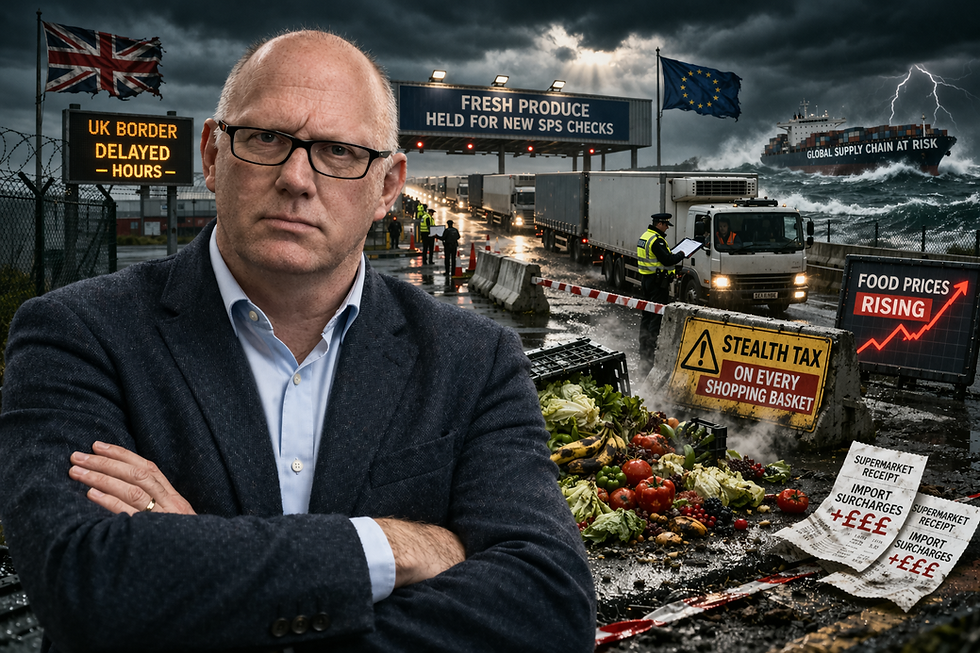
In a strongly worded open letter to The Grocer last week, Jenney dismantled claims that the deal would reduce friction and cut costs, arguing instead that it risks introducing a far more burdensome and expensive regulatory framework—particularly for imports from the rest of the world.
He warned that the government appears willing to impose “unnecessarily stringent” SPS controls aligned to the European Union model, despite the UK’s existing risk-based system being both “proven” and “highly effective”.
Jenney stressed that such a shift would represent “a serious act of economic self-harm”, undermining efficient sourcing and placing avoidable strain on supply chains.
At the heart of his argument is a growing concern that the proposed changes would trigger a cascade of new bureaucracy—more inspections, increased paperwork, border delays and port congestion. Each additional layer, Jenney argues, compounds costs across the supply chain, ultimately landing with British consumers.
“The result is a textbook tax by stealth,” he stated, warning that while the costs may not be explicitly declared, they would be “sharply felt” as official fees rise and millions are funnelled into the Exchequer.
The intervention reflects mounting frustration across the sector, which has already absorbed years of disruption following Brexit, including shifting border regimes, policy delays and inconsistent guidance. Jenney made clear that businesses are no longer willing to accept what he described as “vague promises and political messaging” without clear, evidence-based justification.
Critically, the letter challenges the government’s narrative that alignment with the EU will deliver clear economic benefits. Jenney points out that no comprehensive impact assessment has been published, leaving businesses to prepare for regulatory changes without understanding their full implications.
He also highlights the success of the current system, noting that imports from non-EU countries already achieve over 99.5% compliance across approximately 120,000 consignments annually—evidence, he argues, that the UK’s risk-based approach is working and does not require wholesale overhaul.
The concern is that, rather than reducing friction, the proposed reset could simply shift it—away from EU borders and onto UK entry points for global trade, threatening the availability, affordability and diversity of fresh produce.
Jenney’s message to government is clear: the industry does not oppose a reset in principle, but it must be grounded in operational reality, not political aspiration.
“The fresh produce and flower sectors do not need more rhetoric,” he wrote. “We need honesty. We need detail.”
As negotiations continue, the FPC is calling for transparency, detailed impact assessments and meaningful engagement with industry—warning that without these, the government risks undermining one of the UK’s most resilient and essential supply chains at a time when affordability and food security remain under intense pressure.
Download the full letter here:
Comments