


Pumpkin Growers Count The Cost Of Summer Drought Ahead Of Halloween
Britain’s pumpkin growers are facing a difficult Halloween season, with summer drought damaging crops and increasing costs as farms prepare to welcome visitors to their autumn picking events.
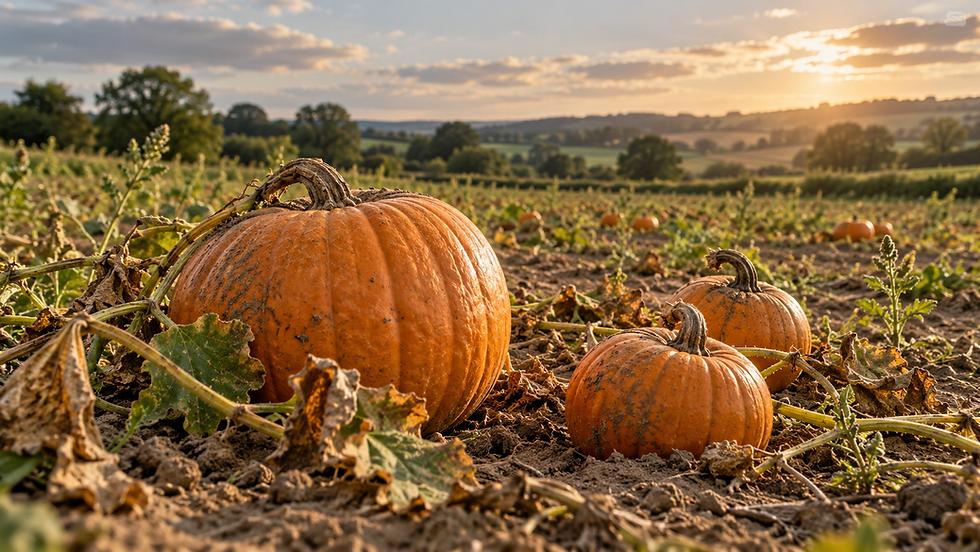
Eleanor Gilbert, who runs the Berkshire Farm Girl Pumpkin Patch and Maize Trail at her family’s Rookery Farm on the Hampshire–Berkshire border, estimates that her pumpkin crop is around 50% below average.
The 24-year-old told NationalWorld that drought had left many pumpkins small, while others struggled to compete with weeds for light and space. After spending £6,000 on pumpkin seed alone, she fears she may barely break even.
“I am about 50% down on my average pumpkin crop,” she said.
“It is really quite devastating. It is not just me, it is farmers across the country. We are taking hits quite a lot lately.”
Gilbert said the expense of counteracting the drought had also made this year more costly.
The damage extends beyond the pumpkin harvest. Poor growing conditions have affected the maize intended for her Halloween maze, forcing her to create a more expensive bale maze instead. Decorations are also expected to be sparser than usual.
Gilbert has developed the pumpkin patch and maize trail over four years and has worked on the family farm since she was 14. Her annual Pumpkin Patch & Big Bale Play event is an important source of income, making the combined impact of crop losses and additional expenditure particularly challenging.
Despite those difficulties, she says she has enough pumpkins for everyone, although visitors should expect some to be smaller following the hot weather.
Reports from Suffolk suggest that size and carving quality are also concerns elsewhere. David Coulter, of Home Farm Pumpkins, told The Telegraph that high temperatures had caused pumpkins to stop growing early, even where moisture remained available.
He described having many small pumpkins and said their skins were thicker than normal, potentially making carving more difficult for younger children. Ketan Dave, of grower Barfoots, suggested drawing on very small pumpkins rather than carving them.
The growers’ experiences come against a backdrop of exceptional summer weather. Provisional Met Office figures put the UK’s average temperature for summer 2026 at 16.5°C, making it the warmest summer in a series dating back to 1884. England, Wales and Northern Ireland also recorded their highest summer mean temperatures.
Rainfall was below average: the UK received 77% of its usual summer total, compared with 64% in England and 59% in Wales, measured against the 1991–2020 average.
July was particularly severe. According to provisional Met Office statistics, England received just 6.5mm of rain — 10% of its long-term monthly average — making it the driest July in records dating back to 1836. Southern England recorded only 1.9mm, or 3% of its average, while Berkshire was among 19 counties receiving no more than 1mm throughout the month.
Water availability matters during pumpkin development. The Royal Horticultural Society advises that pumpkins need substantial watering, especially while fruiting, and that insufficient water can hinder fruit production.
The reports demonstrate significant difficulties at individual farms, although they do not establish a national percentage decline in pumpkin production or confirm a UK-wide shortage.
For businesses such as Gilbert’s, the immediate challenge is clear: welcoming Halloween visitors while managing fewer pumpkins, altered attractions and higher costs. Her reassurance that pumpkins remain available also underlines an important distinction — a difficult harvest does not necessarily mean an empty patch.
Comments